New post-trade operating model - the path forward: whitepaper
A practical perspective on the road ahead for post-trade transformation and the barriers firms still need to overcome.
In Partnership with


Part four of the series examines the next phase of post-trade transformation. It explores the impact of legacy systems, integration costs, alternative assets and regulatory change, and how firms are modernising infrastructure to build more agile and resilient operations.
T+0 allocations critical
Operations
Older infrastructure is fragile, inflexible and costly to maintain — and is struggling to meet changing regulatory, client and market demands.
Firms that have not yet automated allocations face the clearest and most immediate execution risk ahead of their T+1 deadlines.
FX spreads rise
Cost
Achieving interoperability adds complexity and raises cost for every firm attempting to modernise independently.
As more firms make the same adjustment, liquidity in the trading-day window may compress further.
Hiring fills gaps
Resources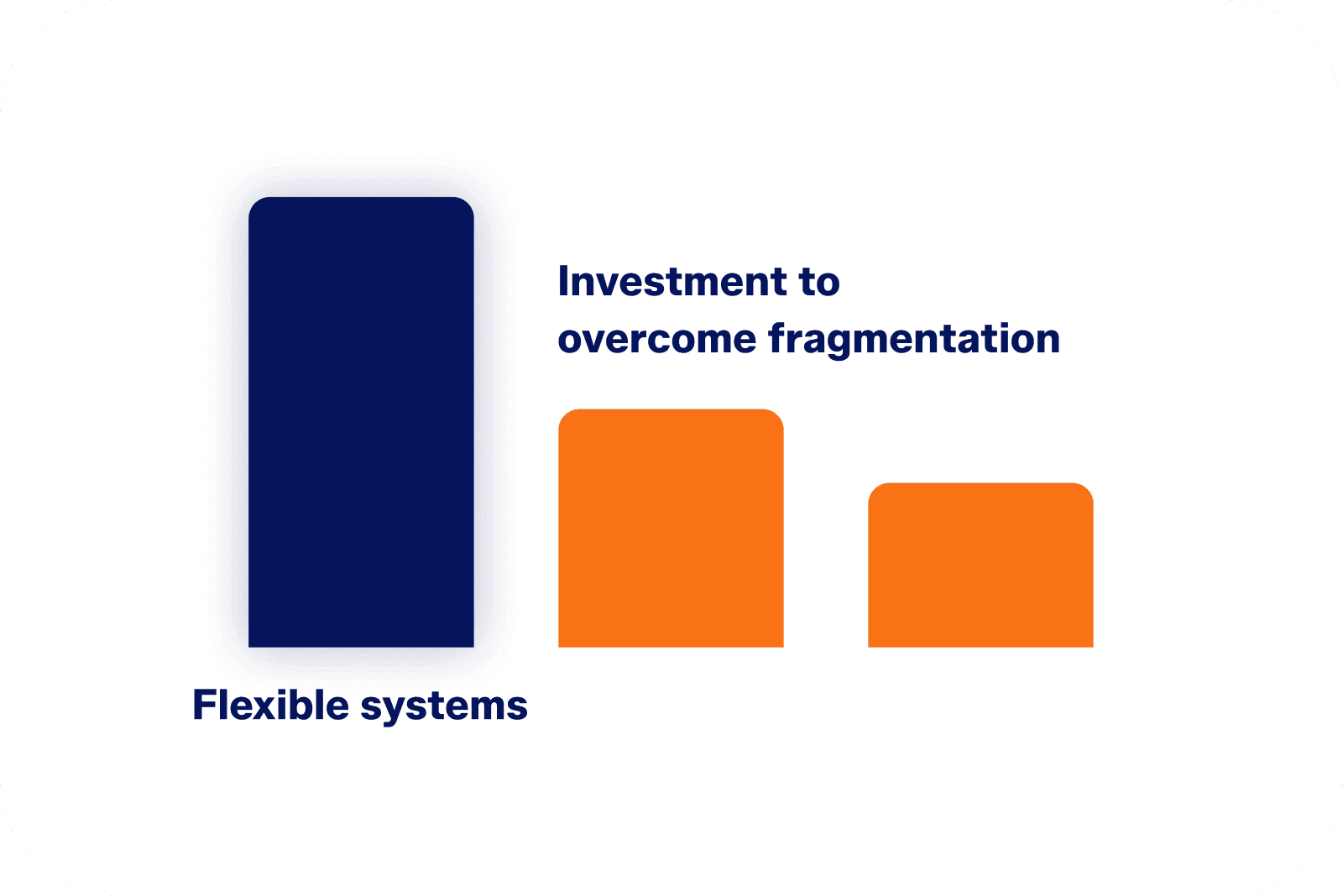
Regulatory change remains a double-edged sword — it supports resilience, but can stifle innovation where rules are not harmonised.
Hiring is a transitional response, not a scalable one — firms that do not automate will face rising costs as volumes grow.
The future of post-trade will be shaped by how firms respond to structural constraints that still limit progress. Legacy infrastructure, high integration costs and uneven regulatory change continue to slow transformation just as data demands, product complexity and client expectations keep rising.
What is still holding post-trade transformation back? How can firms modernise operations while managing interoperability, resilience and the demands of a more complex market environment?
Part four of the series examines the path forward for firms navigating post-trade change. It explores the barriers created by legacy systems, the rise of alternative assets, the importance of data and the need to build more integrated and scalable operating models.
The research, produced in partnership with S&P Global Market Intelligence, highlights:
Legacy systems remain a major obstacle: older infrastructure is still fragile, inflexible and costly to maintain under rising market and regulatory demands
Achieving interoperability across counterparties, custodians and market infrastructures remains a persistent burden
Compliance demands support resilience but fragmented rules across jurisdictions continue to increase cost and complexity
Keep reading — it's free
Verify your email to read this content
Ask the Xchange AI
Have a question about our research? Ask our AI assistant for specific insights.
SHARE THIS INSIGHT

Discover More
View All Insights
Xchange brief
22 October 2026
They have crossed from retail speculation into regulated financial market infrastructure: USD 63bn market grows by 300% per annum.
Report
21 October 2026
Explore why connected data flows are key to improving European settlement efficiency ahead of T+1.

Xchange brief
20 October 2026
USD 822bn cumulative volume in first five months of 2026. Perpetual futures are migrating into regulated capital markets.
Xchange brief
16 October 2026
T+1, tokenisation, 23x5 trading, and clearing mandates shift from rulebooks to live infrastructure. Are you ready?