Reimagining corporate actions: report
How firms are rethinking cost, data and operating models in corporate actions.
In Partnership with



Rising corporate actions volumes are increasing pressure on cost, people and error control across the industry. This report examines the structural burden created by manual data validation, the limits of in-house processing and why firms are reassessing automation and outsourcing models.
Regional unit cost
Cost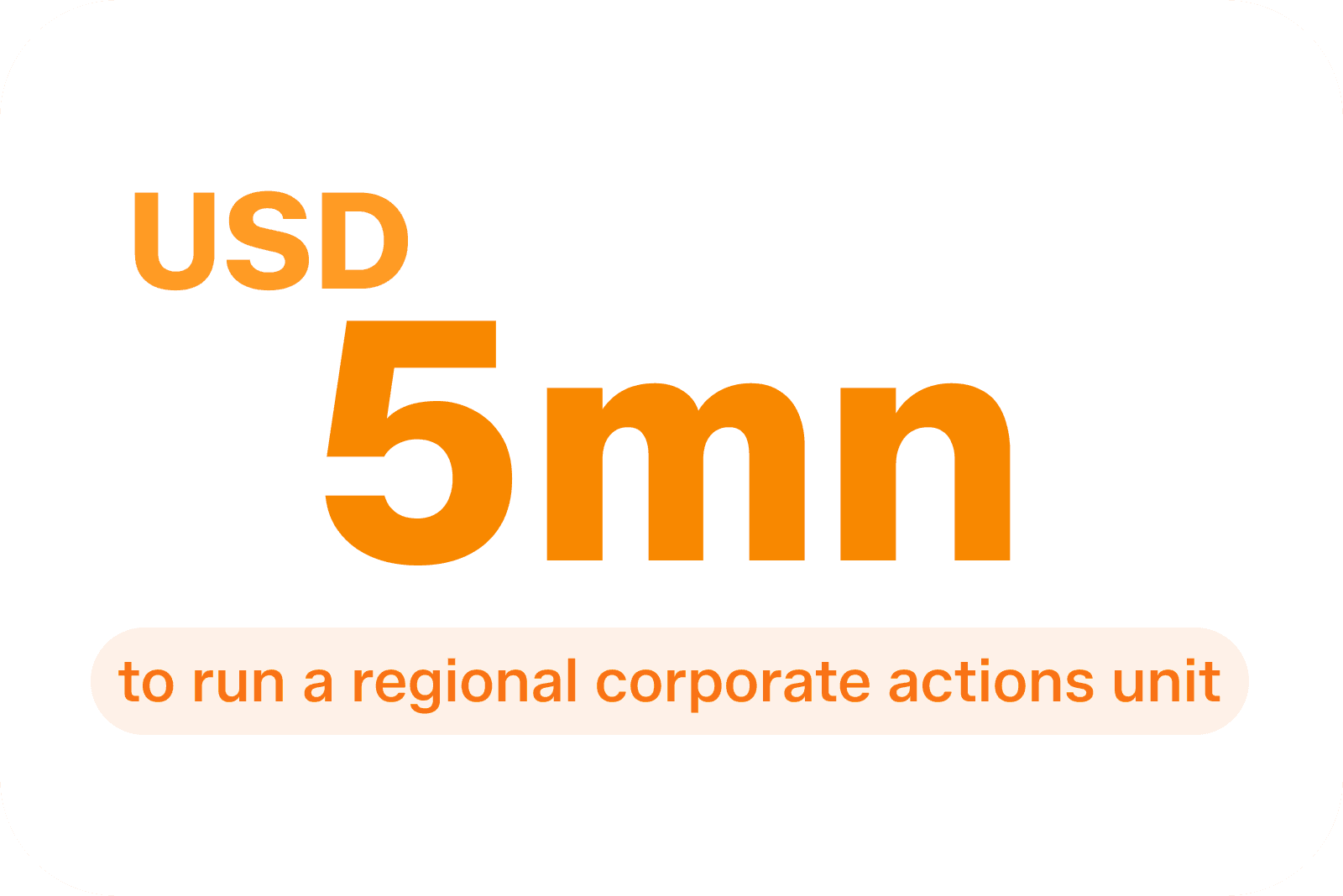
While that level may be expected for custodians, costs above USD 3 million for brokers and investors point to a broader structural problem.
At these cost levels, even modest volume growth without automation creates a compounding financial burden.
Manual validation burden
Operations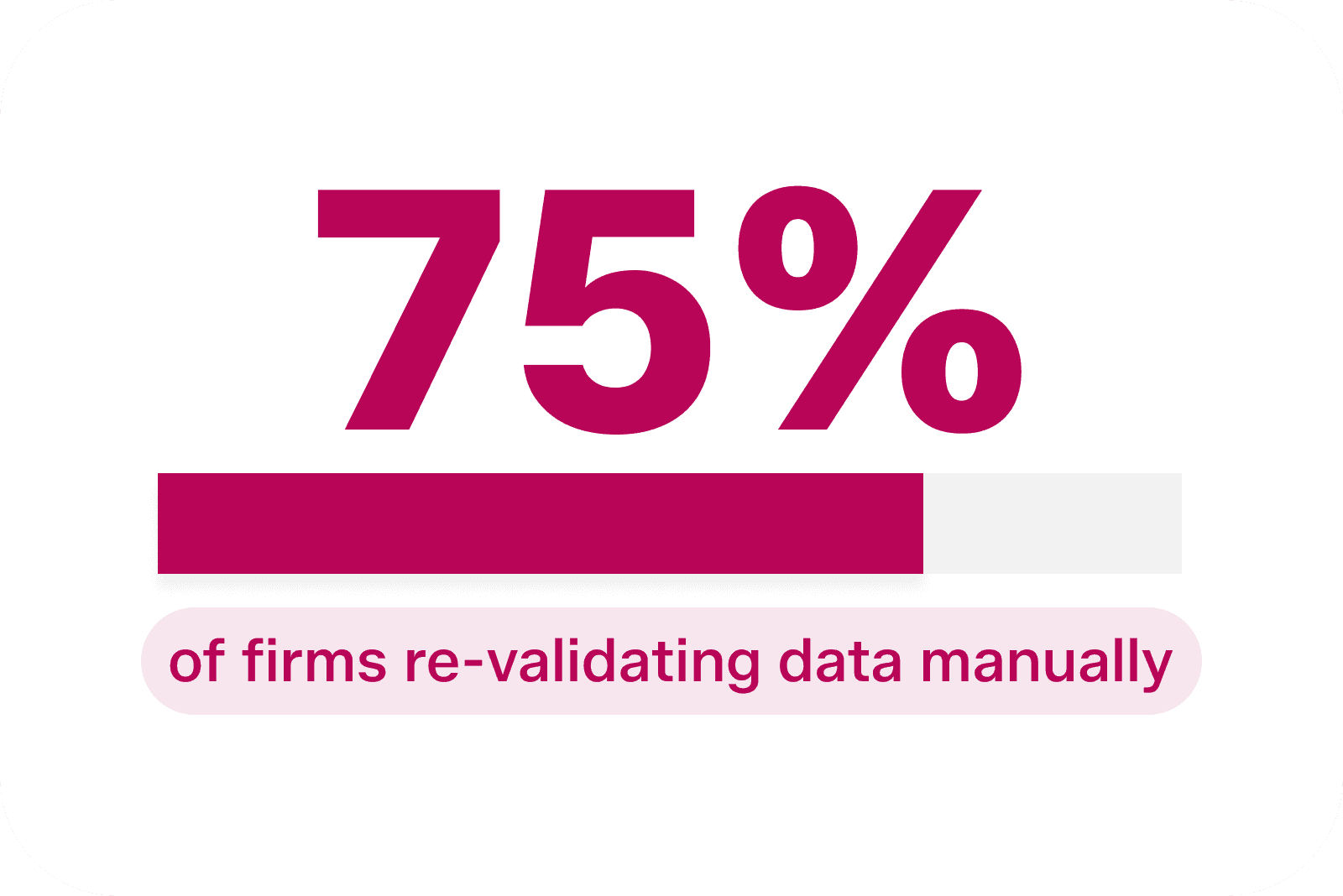
In the absence of a single trusted source, firms are checking and enriching event data themselves — often across as many as 18 sources per region.
Manual validation is not a legacy issue fading away — it remains an active daily cost for most of the market.
Zero large losses
Outsourcing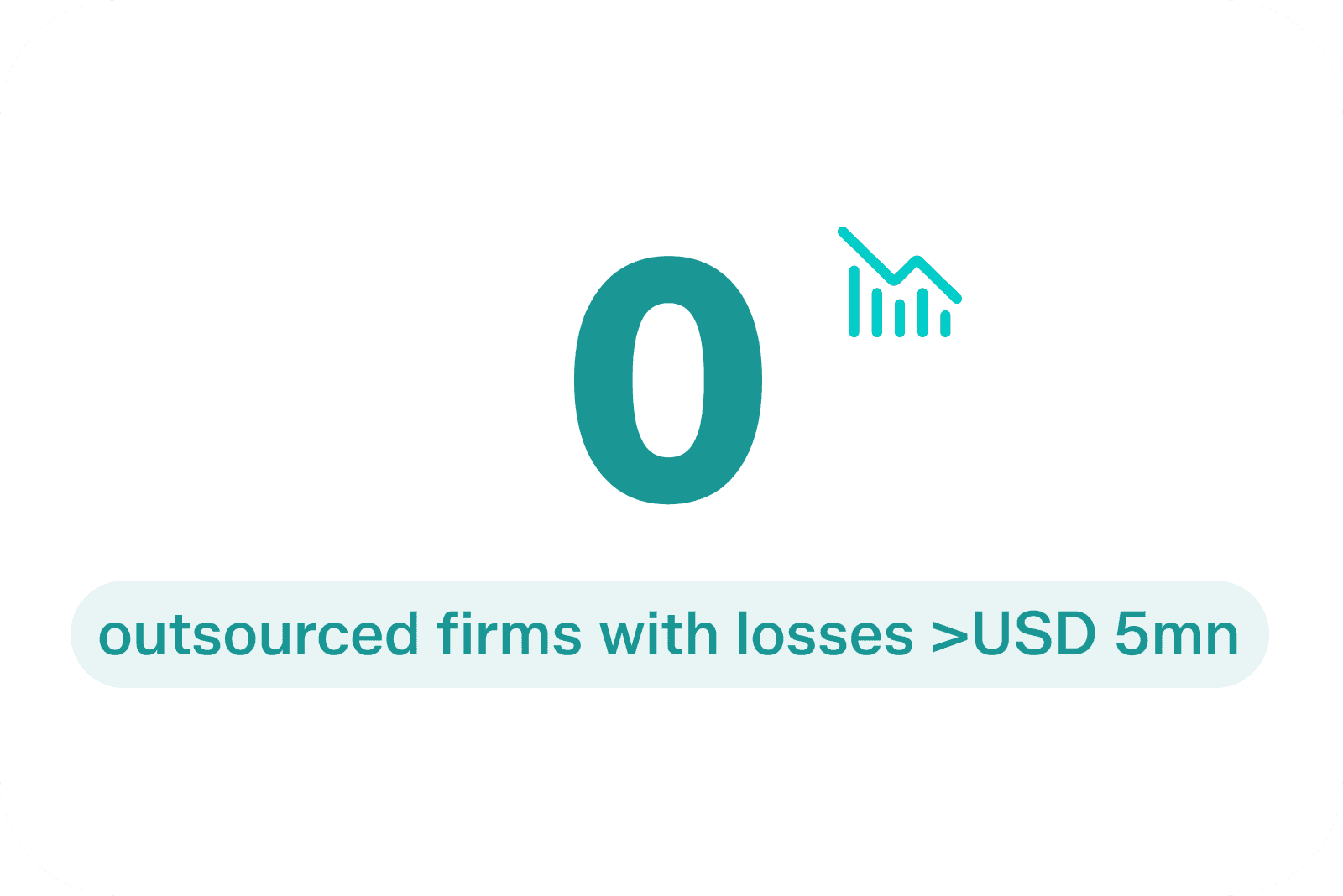
Among firms that have outsourced processing, no respondents reported large-scale losses — a result that in-house models do not replicate at the same rate.
Outsourced models also show materially lower error exposure than firms that continue to run processing in-house.
Corporate actions are reaching a tipping point as higher event volumes place more strain on existing operating models. The challenge is not only scale, but the growing cost of duplicated data work, manual processing and error exposure across firms that continue to run fragmented workflows.
How are firms responding as corporate actions become harder to scale? What does the data show about the cost and risk trade-offs between in-house, automated and outsourced models?
The report draws on industry-wide survey data and interviews across the market to examine the case for corporate actions transformation. It looks at current cost structures, the burden of manual data validation and the different operational outcomes associated with outsourcing and automation.
The research, sponsored by S&P Global Market Intelligence and supported by International Securities Services Association (ISSA), highlights:
Corporate actions operating costs now reach as high as US dollar (USD) 5 million, with broader structural pressure extending beyond custodians
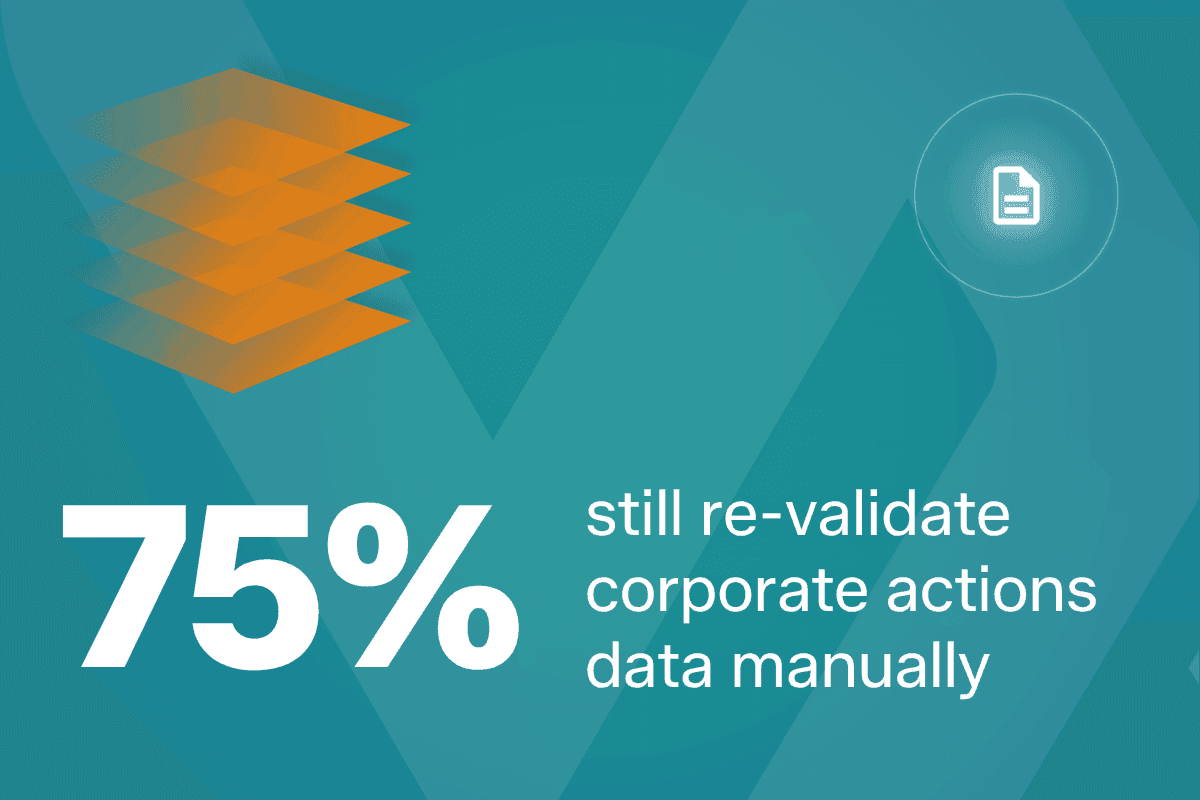
75% still re-validate data manually: most firms continue to check custodian and exchange data by hand, often across as many as 18 sources per region
Respondents using outsourced models reported lower exposure to large-scale losses than firms still processing in-house
Corporate actions models are reaching a tipping point: rising volumes of up to 30% are intensifying the need for more scalable operating structures
Keep reading — it's free
Verify your email to read this content
Ask the Xchange AI
Have a question about our research? Ask our AI assistant for specific insights.
SHARE THIS INSIGHT

Discover More
View All Insights
Xchange brief
22 October 2026
They have crossed from retail speculation into regulated financial market infrastructure: USD 63bn market grows by 300% per annum.
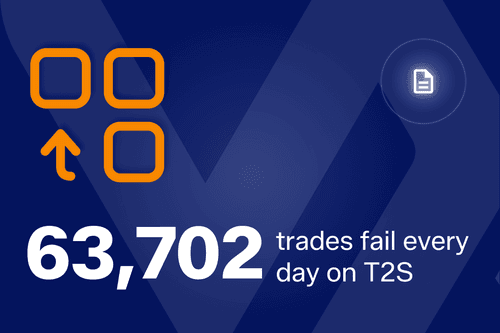
Report
21 October 2026
Explore why connected data flows are key to improving European settlement efficiency ahead of T+1.
Xchange brief
20 October 2026
USD 822bn cumulative volume in first five months of 2026. Perpetual futures are migrating into regulated capital markets.
Xchange brief
16 October 2026
T+1, tokenisation, 23x5 trading, and clearing mandates shift from rulebooks to live infrastructure. Are you ready?