Corporate actions in Australia - transformation: report
How Australian firms are strengthening the case for corporate actions transformation.
In Partnership with


Corporate actions transformation in Australia is becoming easier to justify as automation improves STP, reduces manual processing and strengthens the economic case for change. This report examines where firms are seeing measurable gains and why post-trade automation is moving higher on the agenda.
Data sourcing burden
Operations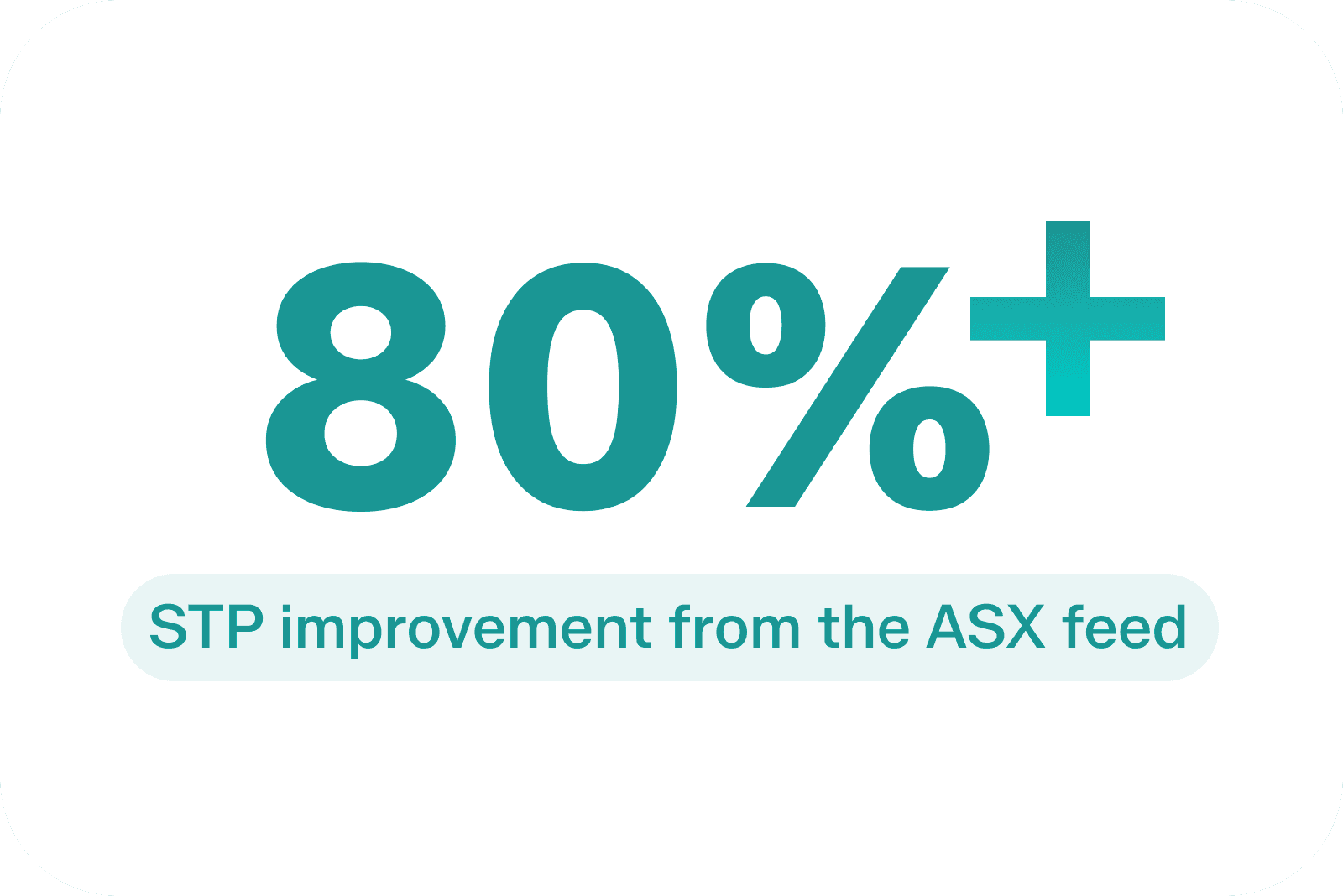
Firms moving to a consistent, market-wide standard are seeing major reductions in manual processing without rebuilding from scratch.
A market-wide data standard would reduce this burden without requiring firms to rebuild their operating model.
Manual data reliance
Risk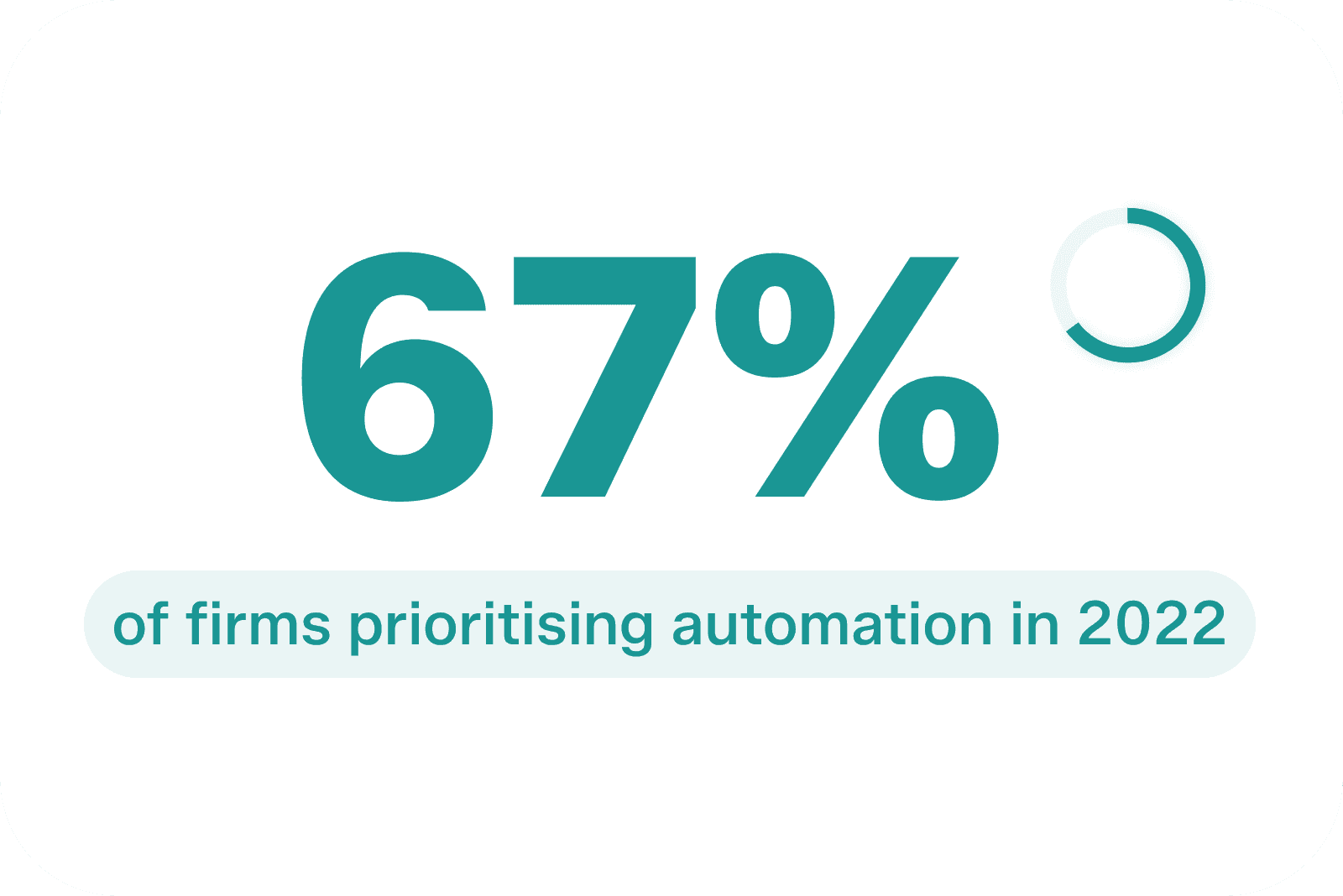
Once a critical mass of firms commits to transformation, investment becomes easier to justify — and harder to defer.
Reliance on manual inputs creates downstream risk that compounds as event volumes rise.
Dividend delivery lag
Operations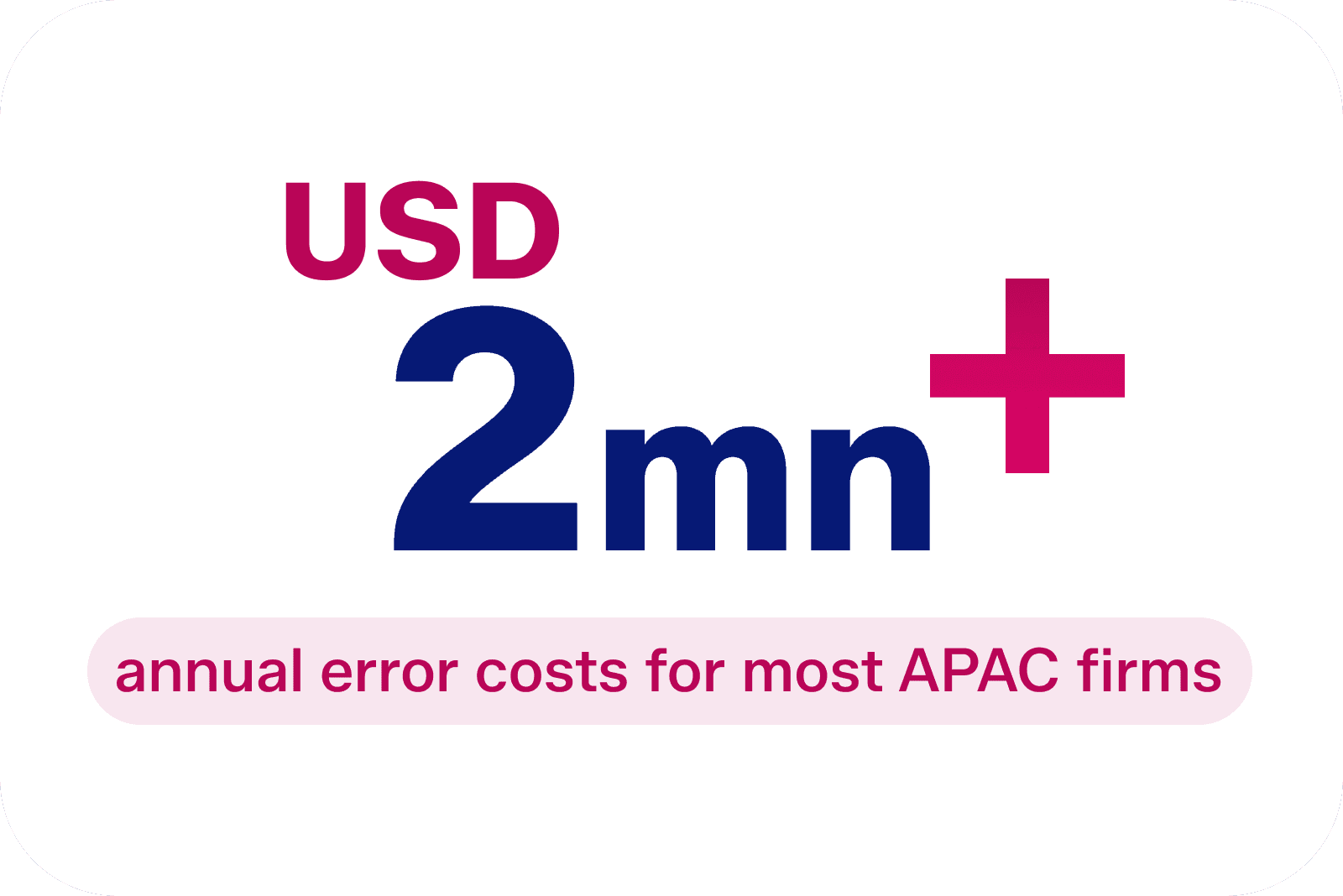
For most APAC firms, error costs now exceed USD 2 million per year — enough to justify significant investment in prevention.
Even routine event types absorb processing time that a more automated model would remove.
The case for corporate actions transformation in Australia is shifting from theory to evidence. As firms adopt more standardised data and automation models, improvements in Straight-Through Processing (STP), error reduction and operational control are making investment decisions easier to support.
What is now making the case for corporate actions automation more compelling in Australia? How are firms linking standardisation and post-trade investment more directly to efficiency and risk reduction?
The report examines how market participants are building the business case for transformation through better data sourcing, stronger automation outcomes and clearer operational economics. It looks at STP improvement, strategic investment priorities and the cost of errors still affecting firms across Asia-Pacific.
The research highlights:
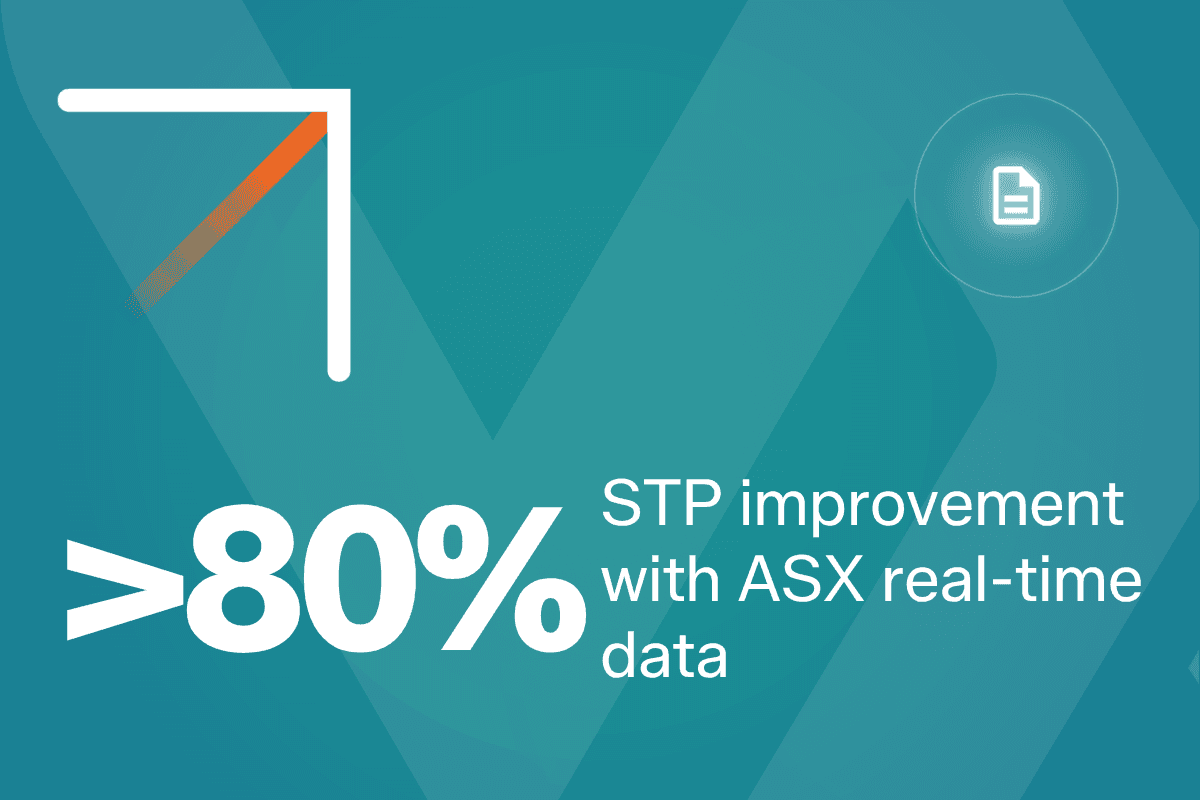
Firms using the Australian Securities Exchange (ASX) Real Time Corporate Actions feed have seen at least an 80% increase in straight-through processing
Automation became a strategic priority for most firms in 2022, making corporate actions investment easier to justify
48% plan to revise data sourcing: nearly half the market expects to revisit Australian data sourcing models over the next three years
Most Asia-Pacific (APAC) participants report yearly error costs above USD 2 million
Keep reading — it's free
Verify your email to read this content
Ask the Xchange AI
Have a question about our research? Ask our AI assistant for specific insights.
SHARE THIS INSIGHT

Discover More
View All Insights
Xchange brief
22 October 2026
They have crossed from retail speculation into regulated financial market infrastructure: USD 63bn market grows by 300% per annum.
Report
21 October 2026
Explore why connected data flows are key to improving European settlement efficiency ahead of T+1.

Xchange brief
20 October 2026
USD 822bn cumulative volume in first five months of 2026. Perpetual futures are migrating into regulated capital markets.

Xchange brief
16 October 2026
T+1, tokenisation, 23x5 trading, and clearing mandates shift from rulebooks to live infrastructure. Are you ready?