Reimagining corporate actions: key findings
How can firms build scale into corporate actions as cost and complexity continue to rise?
In Partnership with



SHARE THIS INSIGHT
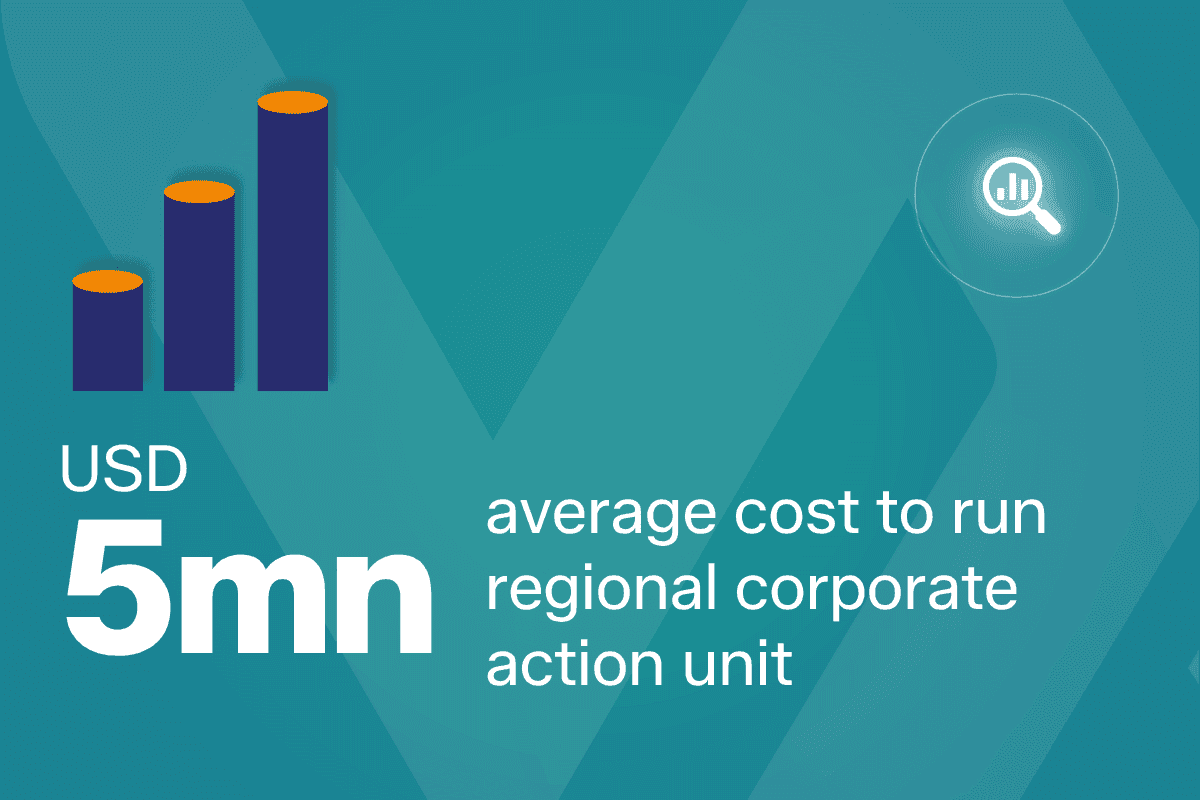
Corporate actions are absorbing more cost and operational pressure than many firms can afford, with some regional business units costing up to USD 5 million to run while scaling to absorb 29% year-on-year growth. These key findings show where efficiency, transparency and control need to improve.
Regional unit cost
Cost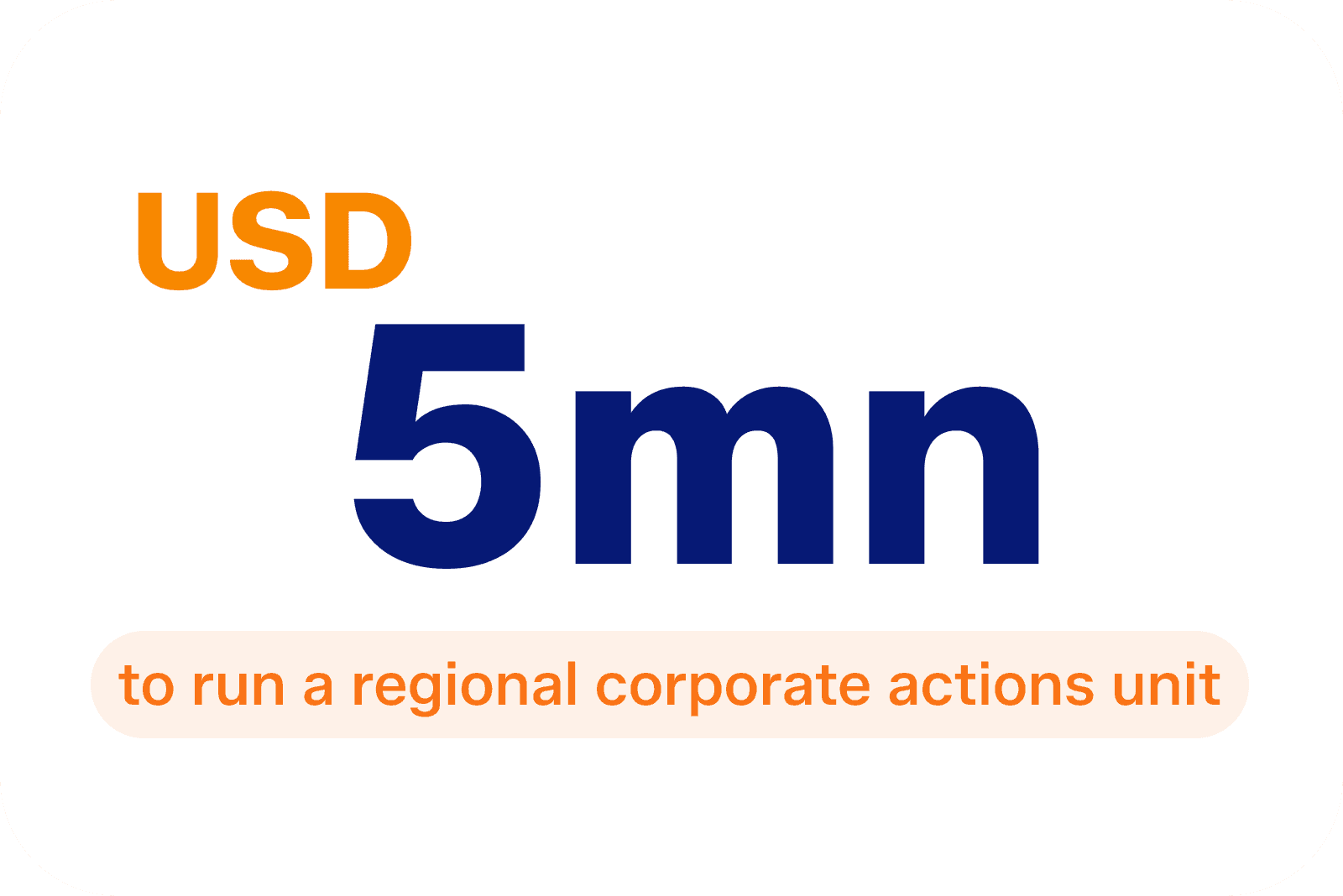
This spend must now absorb 29% year-on-year volume growth without a matching increase in automation.
The combination of high fixed cost and rising volumes is making current operating models harder to sustain.
Manual validation persists
Operations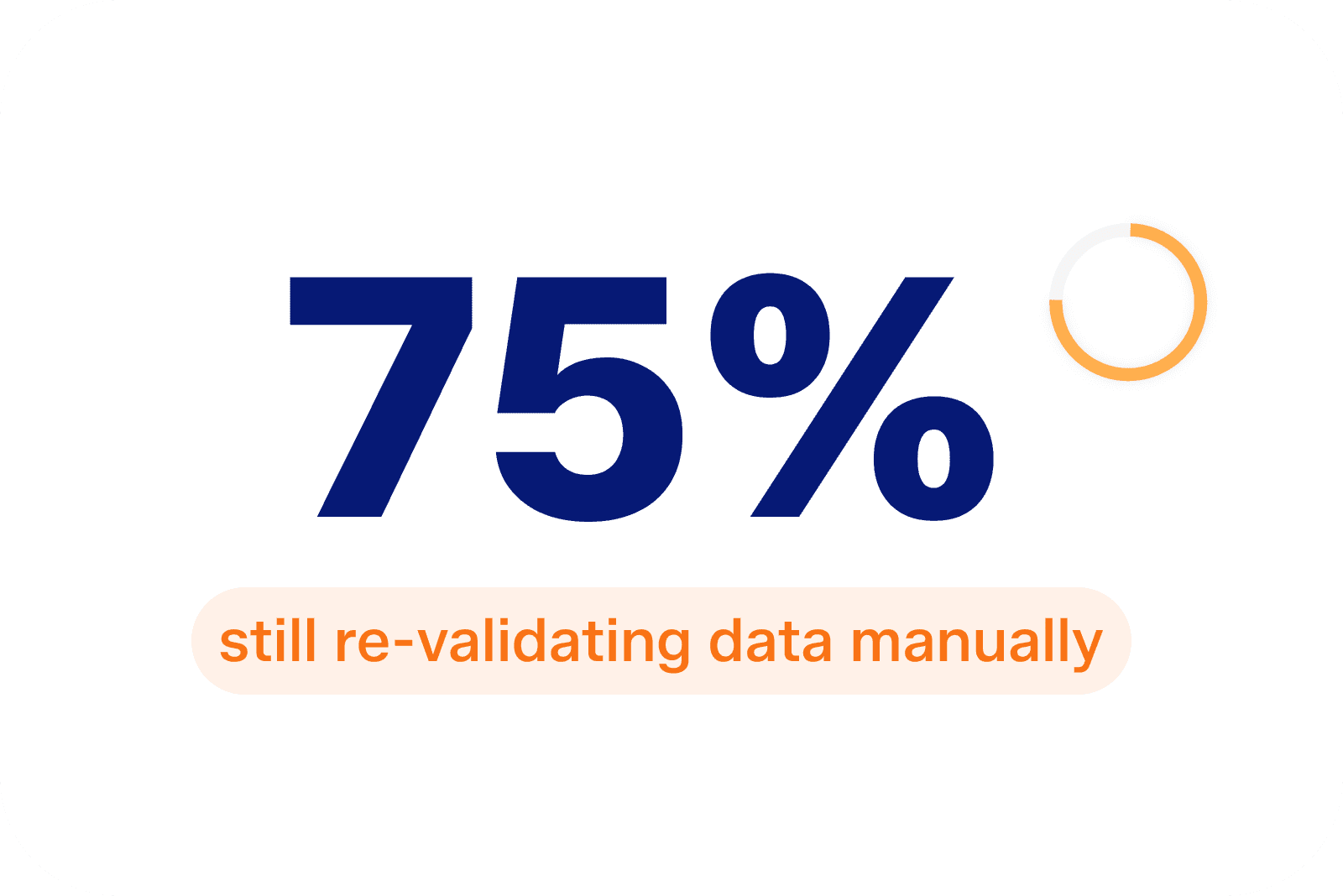
Manual validation is highest in growth markets, adding cost and risk where operational pressure is already greatest.
Firms are checking across up to 18 sources per region, multiplying both effort and error exposure.
Broker loss exposure
Risk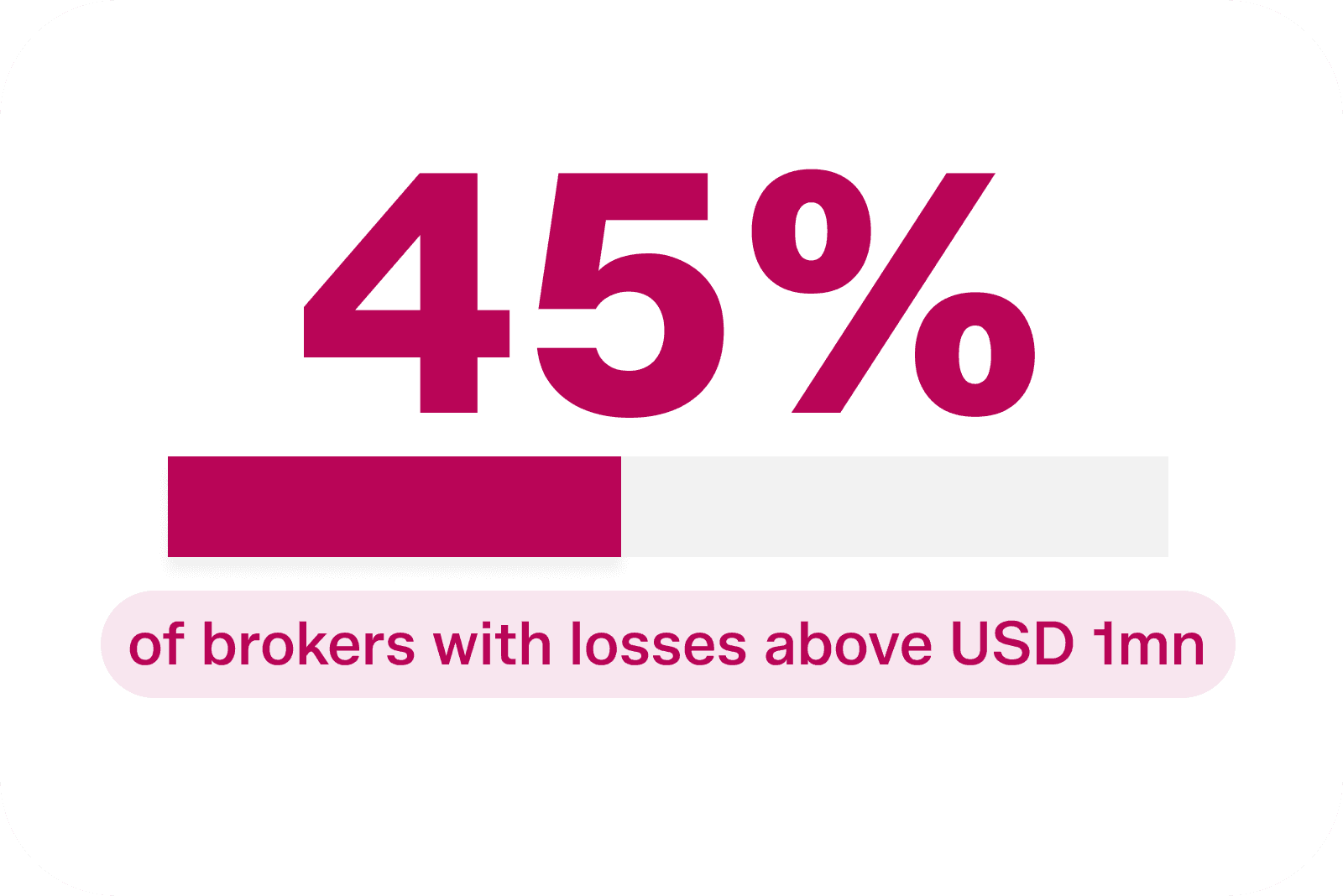
Brokers are at the centre of error cost exposure – nearly half have absorbed losses large enough to justify urgent operational change.
The frequency and scale of losses underline the systemic risk created by fragmented data and manual processing.
Corporate actions are no longer a back-office process that can absorb growth without consequence. As volumes rise and operating costs remain high, firms are being pushed to rethink how they build scale, control and efficiency into their models.
How can firms scale corporate actions in a more resilient and efficient way? Where are data, timing and transparency still constraining performance, and what needs to change to turn corporate actions from a cost centre into a stronger operational capability?
The findings draw on insight from across the investment lifecycle and provide a practical view of the transformation pressures affecting corporate actions operating models today.
The research, produced in partnership with S&P Global Market Intelligence and International Securities Services Association (ISSA), highlights:
Some regional corporate actions business units cost up to US dollar (USD) 5 million to run while needing to absorb 29% year-on-year growth
17% average expected cost growth in corporate actions
45% of brokers suffered losses of >USD 1 million in the last 24 months
40% improvement in volume/cost efficiency from outsourcing
Data and messaging matter more: outsourcing, transparency and standards such as ISO 20022 are becoming more central to building scalable corporate actions models
Keep reading — it's free
Verify your email to read this content
Ask the Xchange AI
Have a question about our research? Ask our AI assistant for specific insights.

Discover More
View All Insights
Xchange brief
22 October 2026
They have crossed from retail speculation into regulated financial market infrastructure: USD 63bn market grows by 300% per annum.
Report
21 October 2026
Explore why connected data flows are key to improving European settlement efficiency ahead of T+1.

Xchange brief
20 October 2026
USD 822bn cumulative volume in first five months of 2026. Perpetual futures are migrating into regulated capital markets.

Xchange brief
16 October 2026
T+1, tokenisation, 23x5 trading, and clearing mandates shift from rulebooks to live infrastructure. Are you ready?