
T+1 in Asia-Pacific.
How prepared is Asia-Pacific for T+1 in practice? Where will firms face the greatest operational and funding strain as settlement windows begin to compress?

In Partnership with





The Context
Key findings
Readiness gap is real
Readiness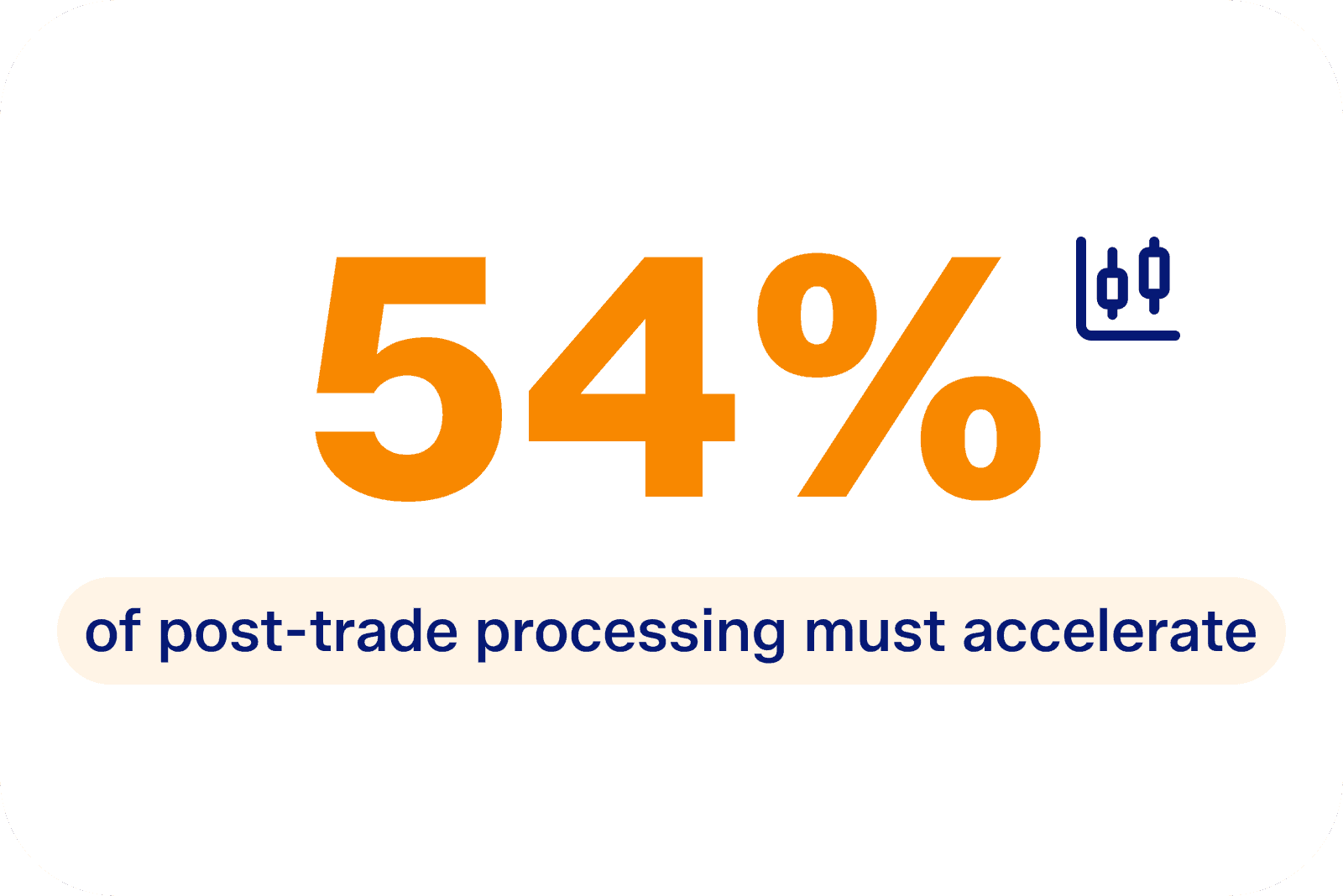
The majority are engaged but engagement and operational readiness are not the same thing.
Around half of North American and European allocations processed by Asian firms would also need to accelerate.
Settlement must accelerate
Risk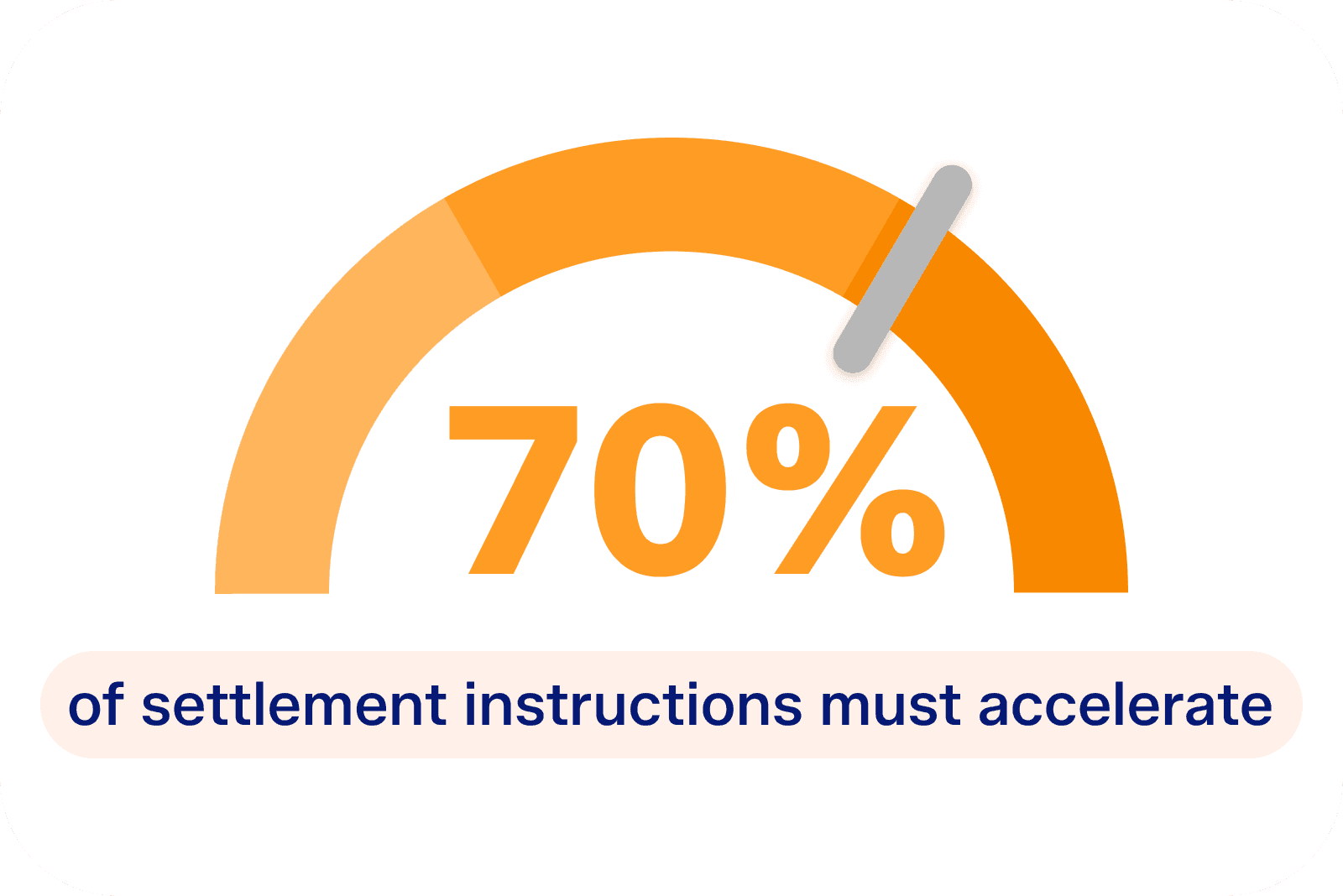
More than half expect to struggle with funding and fails discipline as timelines compress.
Currency movement timing restrictions are seen as the biggest operational risk across regional markets.
FMIs must lead
Outlook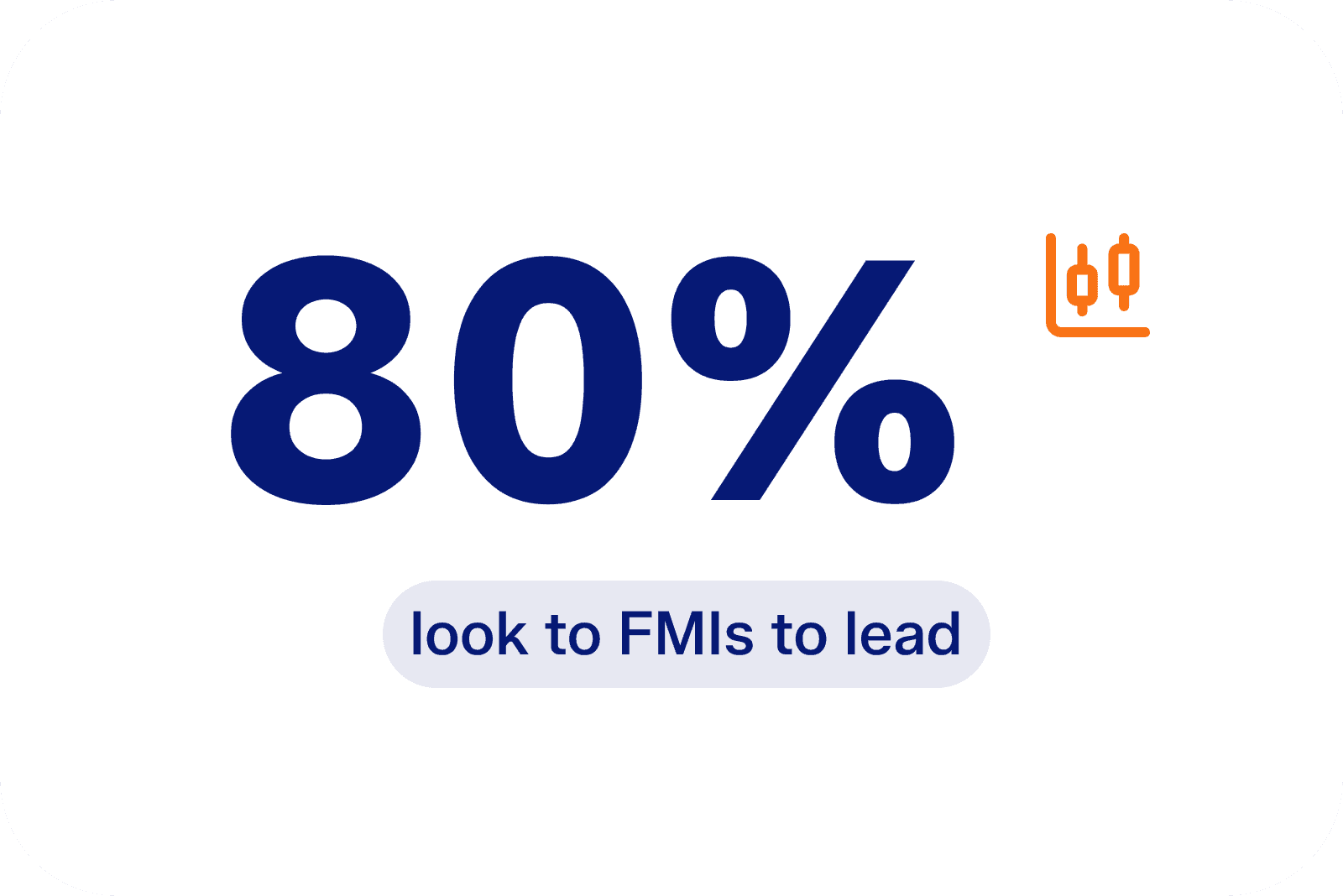
Every foreign investor sees rule alignment across Asia as critical – without it, trade fails and costs will rise.
2028 is emerging as the most realistic transition year given the market structure still to be resolved.
Asia-Pacific sees the long-term case for T+1 clearly, but the path to implementation remains operationally demanding. The data shows a region facing compressed funding windows, settlement discipline pressures and uneven readiness across the post-trade lifecycle.
How much of Asia-Pacific's post-trade model needs to change to support T+1? Where are firms already engaged, and which dependencies across foreign exchange (FX), messaging and market infrastructure still threaten delivery?
The findings are based on input from 244 market participants across the industry and provide a regional view of how firms are preparing for accelerated settlement, where friction remains and what the transition could require in practice.
Produced in partnership with Depository Trust & Clearing Corporation (DTCC), FIS, Nasdaq, Standard Chartered and Society for Worldwide Interbank Financial Telecommunication (SWIFT), the research highlights:
74% of respondents are already working on T+1 in Asia-Pacific, but 54% of post-trade processing will still need to accelerate to comply
70% of settlement instructions must speed up: more than half of respondents expect to struggle with funding and fails discipline as settlement timelines compress
2028 is emerging as the likely transition year: firms see additional time as necessary to address market structure, sequencing and cross-border complexity
80% are looking to financial market infrastructures (FMIs) to lead: market infrastructures are seen as central to driving alignment across messaging standards, FX cycles and settlement timings
Rule alignment remains critical: all foreign investors surveyed see harmonised rules across Asia as essential to reducing trade fails and operational friction
Keep reading — it's free
Verify your email to read this content
Ask the Xchange AI
Have a question about our research? Ask our AI assistant for specific insights.
Xchange Podcast
Post-trade change in Asia is following a different path from other regions as firms assess T+1 alongside a broader set of digital and operational priorities. The question is not only whether faster settlement makes sense now, but how it compares with other transformation needs across the region.
In this episode of Xchange, Barnaby Nelson, Jean-Remi Lopez and Mark Brannigan reflect on recent discussions across Asia, exploring the case for T+1, the regulatory and market practices shaping settlement cycles, and what digital assets, tokenisation and potential 24/5 trading in the US could mean for the region.
The episode highlights:
Whether T+1 has a clear business case in Asian markets today
How regulation and market practice continue to shape settlement models
Why digital assets and tokenisation may address more immediate bottlenecks
Subscription Required
Create an account and subscribe to Xchange to access premium research insights.
Webinar
What is holding back full T+1 readiness across Asia-Pacific? How are firms responding to the combined pressure of time zone compression, cross-border complexity and stricter settlement discipline?
This session brings together Alexei of Depository Trust & Clearing Corporation (DTCC), Yash Puri of FIS, An Tran Quoc of Standard Chartered, Chermaine Lee of Society for Worldwide Interbank Financial Telecommunication (SWIFT) and Jean-Remi Lopez of The ValueExchange to examine how T+1 is evolving across Asia-Pacific (APAC) and where firms need to focus next.
The session highlights:
Why time zone compression effectively makes APAC a T+0.5 environment
How funding and FX constraints remain the dominant risk across regional markets
Why 54% of settlement instructions are still being sent after T0
What the US transition showed about the impact of same-day affirmation
Why automation, data quality and ISO 20022 messaging are becoming more critical
Keep watching — it's free
Verify your email to watch this content
Speakers

An Tran Quoc
Head of International Custody Product
Standard Chartered
Alexei Maras
Head of Growth & Strategic Alliances APAC
DTCC
Chermaine Lee
Director, Business Development & Go-to-Market
SWIFT
Jean-Rémi Lopez
Senior Advisor (APAC)
The ValueExchange
Yash Puri
Director, Strategic Solutions (APAC)
FISReport
APAC T+1 engagement
Engagement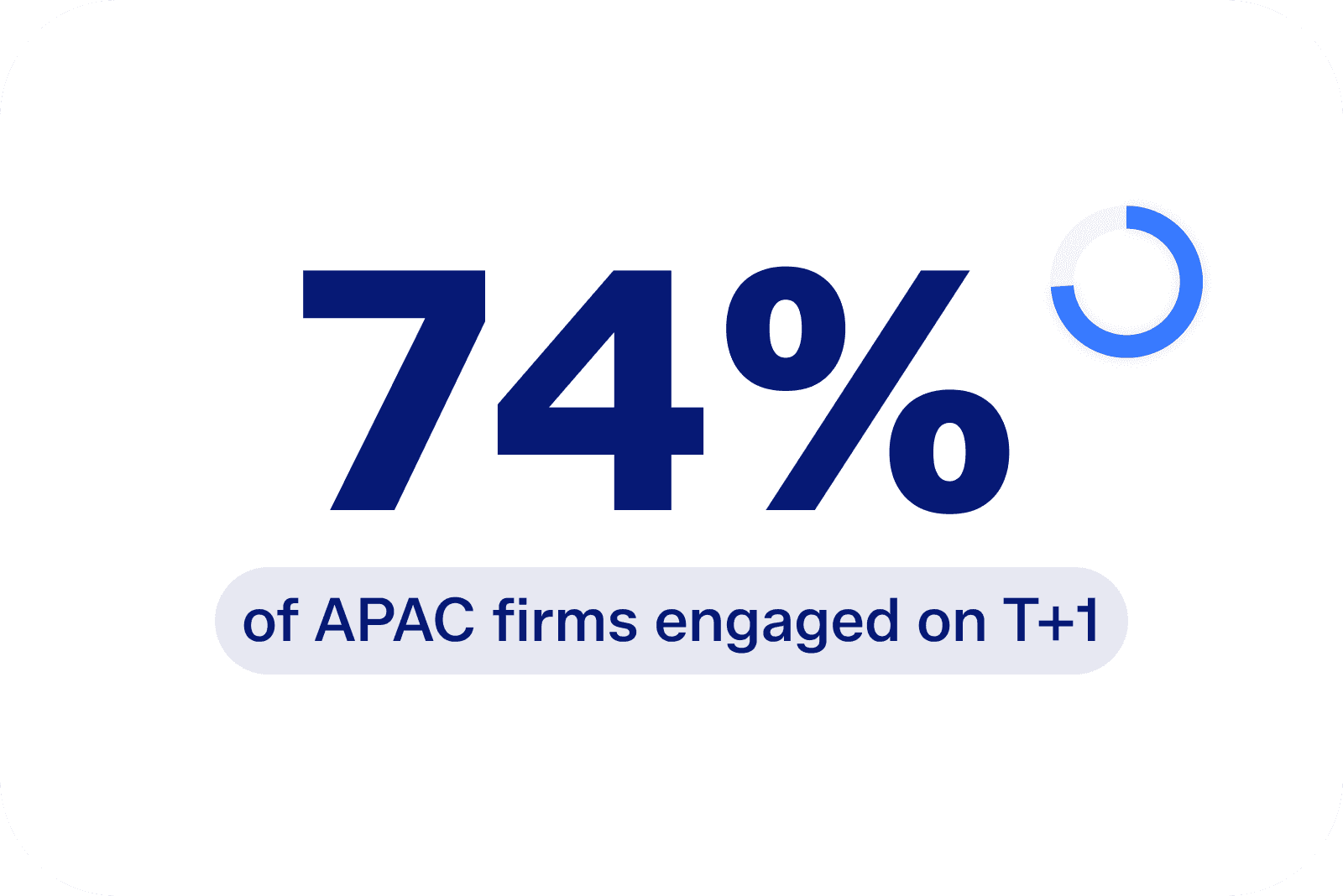
At this stage, APAC appears ahead of peer markets on overall engagement — but engagement and operational readiness are not the same thing.
The gap between participation and preparedness remains significant, with funding, FX and timing pressures still unresolved.
Processing must accelerate
Acceleration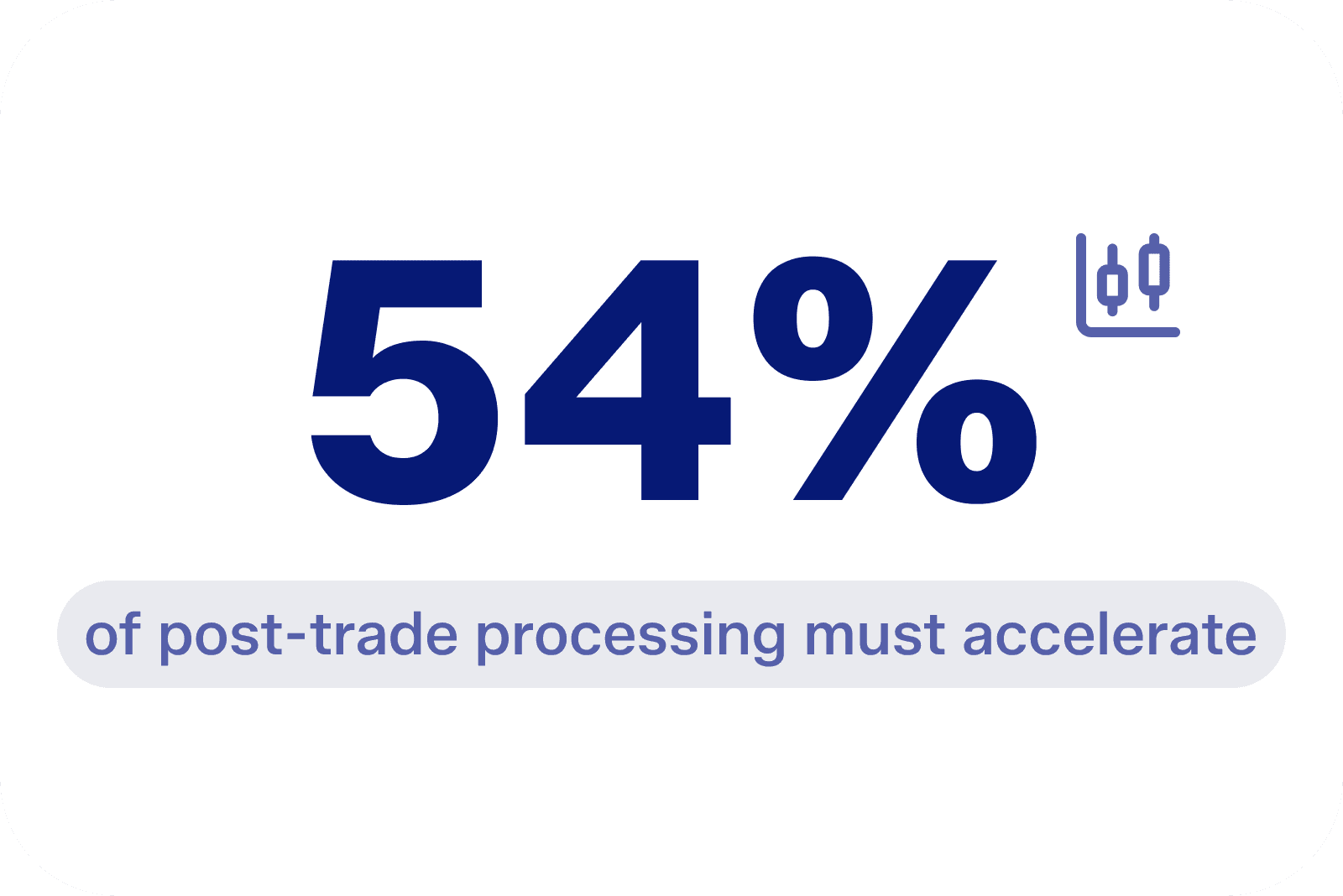
For settlement instructions specifically, the figure rises to 70% — showing that the acceleration challenge is concentrated at the most time-critical point.
Confirmations, allocations and settlement instructions are all facing materially tighter cut-off windows as the cycle compresses.
Funding strain ahead
Risk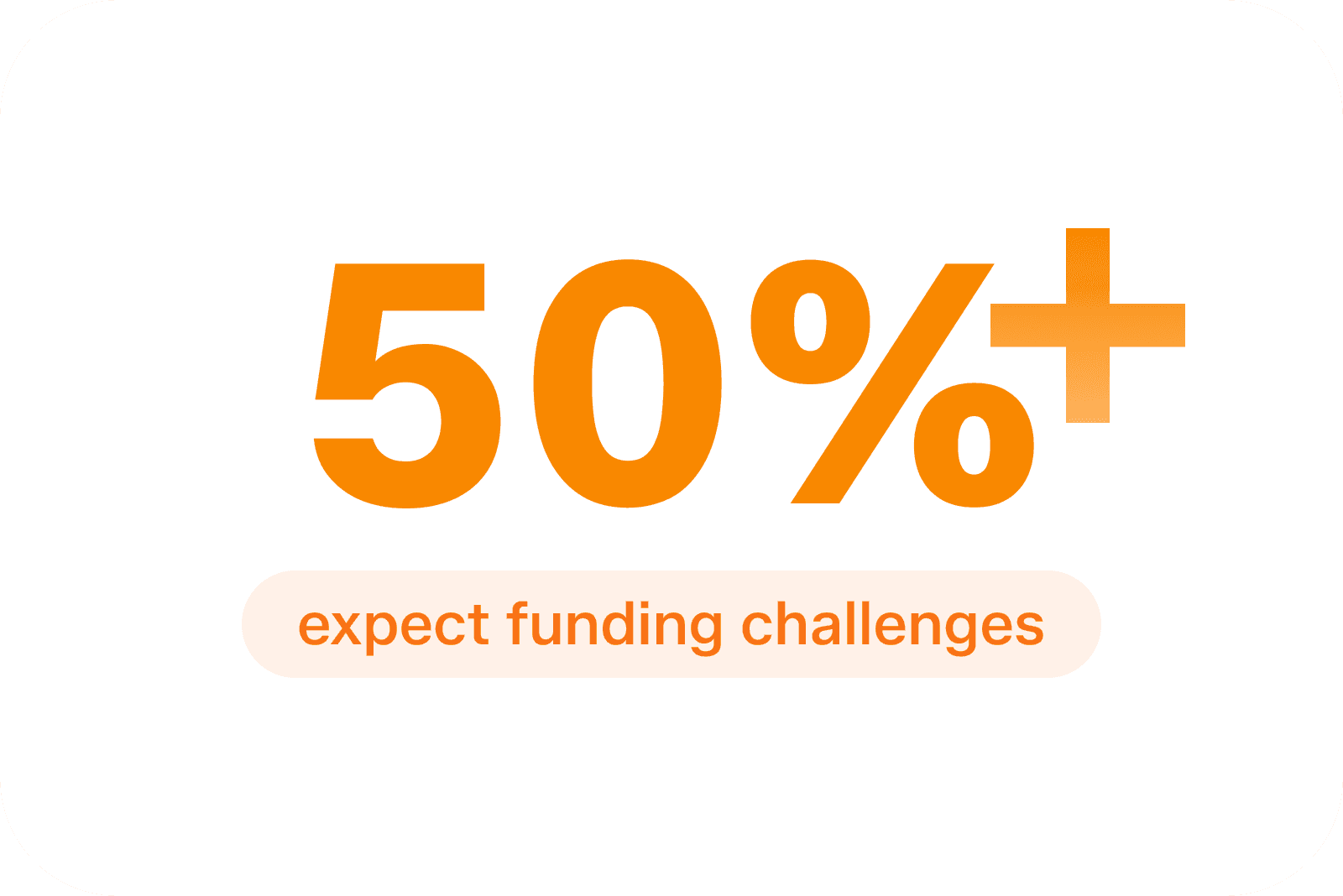
Fails management is the leading concern in tier one markets, while FX and funding are the dominant pressure points in tier two and tier three markets.
The risk profile varies materially by market tier, making a single regional response unlikely to be sufficient.
T+1 in Asia-Pacific is moving from discussion to active planning, but the region faces a more complex transition path than many other markets. Shorter settlement cycles will place greater pressure on processing timelines, funding models and cross-border coordination across markets with very different structures.
How prepared is Asia-Pacific for T+1 in practice? Where will firms face the greatest operational and funding strain as settlement windows begin to compress?
The whitepaper examines how the region is adapting to shorter settlement cycles and what still needs to align before T+1 becomes workable across Asia-Pacific (APAC). Based on input from 244 global and regional firms, it looks at readiness levels, differences in market structure, the impact of time zones and cut-off windows, and the distinct risk pressures affecting each market.
The research, developed in partnership with Depository Trust & Clearing Corporation (DTCC), FIS, Nasdaq, Standard Chartered and Society for Worldwide Interbank Financial Telecommunication (SWIFT), highlights:
74% actively engaged on T+1: most respondents across APAC are already involved in planning or preparation activity
54% of post-trade processing must accelerate: more than half of regional post-trade activity will need to move faster under T+1
70% of settlement instructions must accelerate: settlement instructions face some of the most significant timing pressure as the cycle compresses
More than 50% expect funding challenges: firms anticipate particular strain in funding and fails discipline, with foreign exchange (FX) and funding pressures central across Asian markets
100% of foreign investors want greater alignment: all foreign investors surveyed see harmonised rules and timings across Asia as a critical enabler of T+1
Keep reading — it's free
Verify your email to read this content
Discover more on T+1 in Asia-Pacific
View All Insights
Report
28 October 2025
How modernisation and standardisation could reshape Asia’s post-trade operating model.

Webinar recording
5 December 2024
How tokenisation could reshape personalisation and wealth servicing across Asia.

Report
15 September 2025
How global settlement change is increasing pressure on Asia’s post-trade operating model.
Dive deeper in the Xchange
View All Insights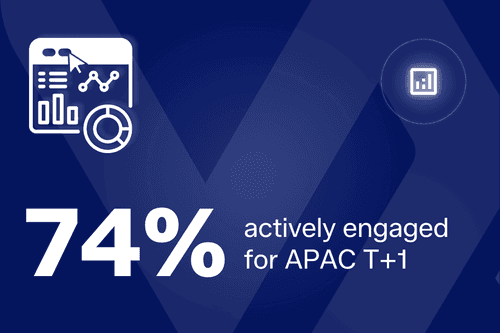
Dashboard
30 September 2025
Interact with our data showing how ready Asia-Pacific is for T+1. Post-trade processing must accelerate.

Xchange brief
12 June 2026
Disconnect between accelerating European securities settlements and Asian fund dealing cycles is a problem the industry has yet to confront.
Xchange brief
10 April 2026
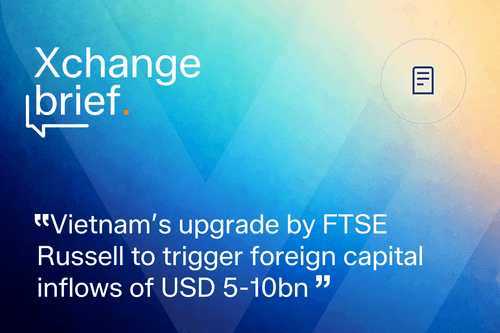
Vietnam will be included in the FTSE Russel Secondary Emerging Market index from September 2026. It will trigger USD 5-10bn of foreign capital inflows. Why does it matter?